
Returning to your car in a car park to find a fresh dent, a long scrape, or a scuffed bumper corner is one of the most frustrating experiences a driver can have. It happens every day across shopping centres, train stations, and busy street bays in Mullingar and throughout Westmeath.
Damage that looks relatively minor at first glance can range from an easy surface rub to cracked bumper brackets or creased metal requiring dedicated workshop attention. Knowing how to handle the situation in the first few minutes keeps you safe, protects your legal and insurance position, and makes arranging a reliable repair assessment much easier.
Recommended immediate sequence
What should you do first?
Before you worry about repair bills or fault, take a calm walk around the vehicle to check whether it is safe and roadworthy. A low-speed bump can sometimes knock mechanical or electrical parts out of place even when the outer panel only looks scuffed.
- Look for visible displacement: Check whether bumper corners have popped away from their wheel arch clips, or whether the bonnet or boot lid sits unevenly.
- Inspect lights, indicators, and mirrors: Make sure headlight lenses, fog light housings, and wing mirror indicator repeaters are unbroken and working properly.
- Check tyres and wheel clearance: Run your eyes over the wheel arch. Ensure a bent wing or bumper liner is not rubbing against the tyre tread or sidewall.
- Look underneath for fluid leaks: Check the ground beneath the impact area for washer fluid, coolant, or radiator drips.
Safety warning: If a bumper is dragging, a tyre is rubbing, or steering feels off, do not drive the car. A quick visual check cannot guarantee mechanical safety. Arrange recovery or seek professional assistance before travelling on public roads.
Document the damage before arranging repairs
Good documentation protects you with your insurance company and gives our body shop technicians the context we need. Take photographs while the car is still in the parking bay if it is safe to do so:
- An overall wide shot: Step back three to four metres so the whole side, front, or rear of the vehicle is visible in its parking bay.
- A full panel context photo: Capture the entire damaged door, bumper, or wing and how it aligns with adjoining panels.
- Sharp close-ups: Focus directly on scratches, cracked plastic, paint flakes, or metal creases.
- An angled view: Stand about 45 degrees to the side so natural light reflections highlight the depth of any dent.
- Time, date, and location notes: Note the exact car park, bay number, lighting conditions, and the approximate time window when you were parked.
If the other driver is still present, exchange names, contact numbers, insurance details, and vehicle registration numbers calmly. Take photographs showing the relative positions of both vehicles where safe and lawful to do so. Never engage in confrontation.
For more detailed guidance on capturing angles that help a workshop assess damage remotely, read our complete guide: What photos to send for a repair assessment.
What if the other driver has left?
Finding damage with no note on the windscreen is unfortunately common. If the other driver has left the scene without exchanging details, treat it systematically:
What type of car park damage do you have?
Car park incidents usually produce one of three typical kinds of damage: surface scuffs and scratches, sharp door dents, or cracked bumper corners.
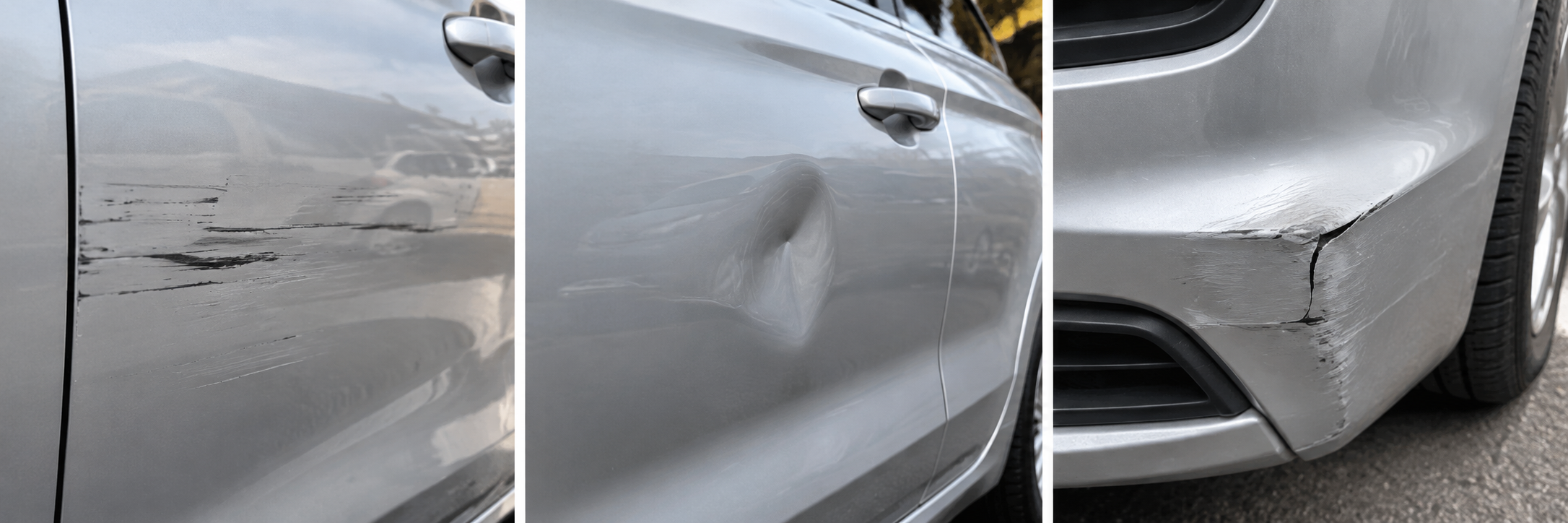
Illustrative guide: three common car park damage types
Note: This comparison illustration is provided for educational purposes to help motorists identify damage categories. It does not depict specific customer repair projects.
Paint scuffs and scratches
A scuff along a door or wing can look terrible because foreign paint or plastic residue has transferred onto your car. You might have heard of the traditional fingernail test, where people say that if your nail catches, the panel must be repainted. In reality, the fingernail test is not definitive: a mark that catches slightly could be a ridge of transferred foreign clearcoat, while a flat mark might already have worn through your colour layer. Only hands-on inspection under workshop lighting can confirm whether machine compounding will clear it or whether professional scratch repair and respraying is required.
Small dents and door damage
A door opened carelessly in the wind often leaves a round ding or a short vertical crease in your door skin or rear quarter. If the original paint is completely intact and the metal has not stretched past its elastic limit, gentle dent removal techniques may be considered. If the impact created a sharp crease or cracked the paint along a body swage line, conventional panel beating and refinishing may be needed. Learn more in our comparison guide on dent removal vs panel beating.
Bumper scrapes and cracks
Modern plastic bumper covers flex on impact and then pop back out, making the damage look like a simple scrape. However, the force often snaps internal plastic mounting tabs, cracks the bumper cover itself, or dislodges parking sensors and radar modules behind the plastic. What looks like a 10-minute touch-up may require plastic welding, recalibrating sensors, or replacing the bumper cover if mounting brackets are sheared.
Can minor car park damage be repaired?
Yes, the vast majority of car park damage can be repaired to a very high standard. Depending on the panel, the paint condition, and how deep the impact went, our technicians consider several repair pathways:
- Surface decontamination and polishing: For superficial paint transfer where your clearcoat is undamaged.
- Cosmetic scratch repair and blending: For scratches that have cut through the clearcoat, repainting and blending into adjacent areas in our spray booth.
- Dent removal: For soft dings with unbroken paint and good access behind the panel.
- Panel beating and reshaping: For deeper creases, stretched metal, or wider panel distortion.
- Bumper repair or component replacement: Plastic welding for split covers, bracket repair, or full replacement for shattered panels. Where structural or chassis alignment has been affected, full crash repairs procedures apply.
Have photos of your car park damage?
Send us a few photos through our quick online assessment.
Should you claim through insurance or pay privately?
Drivers facing car park damage often wonder whether to make an insurance claim or pay for the repair out of pocket. There is no single rule that fits everyone: every motor policy has different terms, excesses, and reporting conditions.
Here are the key factors you should weigh up:
1. Policy excess
Check your policy excess (typically between €250 and €500 or more in Ireland). If the repair cost is close to or below your excess, claiming may not be practical.
2. Notification obligations
Most Irish motor insurance policies require you to notify the insurer of any incident or damage, even if you intend to settle the repair privately. Failing to notify could affect future claims.
3. No-claims bonus and step-back protection
Consider whether your policy includes full or step-back no-claims discount protection, and how a claim might affect future renewal premiums.
4. Getting a repair assessment first
Getting a professional repair quote before making a final decision gives you real figures to compare against your excess and potential premium changes.
Please note: The Body Shop Crash Repairs provides repair assessments and workmanship, but we do not provide financial or insurance advice. Always consult your insurance provider or broker for policy-specific guidance.
When should the damage be inspected?
While minor surface scratches can wait for a convenient time, certain signs call for a prompt workshop inspection:
- Cracked or loose bumper assemblies: To ensure internal brackets have not failed and won't detach at speed.
- Distorted door or panel gaps: If a door catches when opening or closing, the hinge pillar or door shell has shifted.
- Exposed bare metal: Deep gouges in steel panels expose bare metal to Irish weather, leading to corrosion if left untreated.
- Warning lights on your dash: Any sensor faults, parking assist warnings, or radar alignment errors.
How to arrange a repair assessment in Mullingar
At The Body Shop Crash Repairs, based at Killeenerk Moyvore near Mullingar, we make getting an assessment as straightforward as possible. You do not have to take time off work just to get an initial steer.
Our online Damage Check process lets you share details from your phone in four simple stages:
Select your vehicle category so we know the panel size.
5 quick questions covering location, paint condition, and drivability.
Upload clear wide, close-up, and angled shots of the damage.
Add your contact details and car make/model so we can follow up.
Our technicians review your photos, consider the likely repair pathway, and follow up with practical advice on next steps or invite you to book an in-person inspection.
Frequently asked questions
What should I do if someone scratches my parked car?
First photograph the car from multiple angles before moving it. Check whether there is a note, look for nearby CCTV, and note the time and bay location. If the other driver left without giving details, report the incident to An Garda Síochána and check your insurance policy reporting rules.
Can car park scratches be repaired without repainting?
Some surface scuffs are paint transfer from another vehicle and can be polished out safely. However, if the scratch has penetrated the clearcoat into the colour base or primer, repainting and blending is usually necessary to restore the finish and prevent corrosion.
Does a small car park dent need panel beating?
Not always. Shallow dents with completely intact paint and good access from behind can often be repaired with less invasive dent removal methods. If the dent has a sharp crease, stretched metal, or broken paint, conventional panel beating and respraying will likely be required.
Can I get a repair assessment from photographs?
Photos are an excellent starting point: they allow our team to see the affected panels and determine the most likely repair method. However, because photos cannot show hidden internal clips or frame alignment, an in-person inspection may be required before confirming a binding quote.
Related Repair Services in Mullingar

The Body Shop Crash Repairs
Based at Killeenerk Moyvore, Mullingar, Co. Westmeath, our team specialises in crash repairs, panel beating, dent removal, scratch repair, and vehicle restoration. We share practical workshop advice to help Irish motorists make informed decisions about their vehicle bodywork.
More from the Advice Hub
 Guides
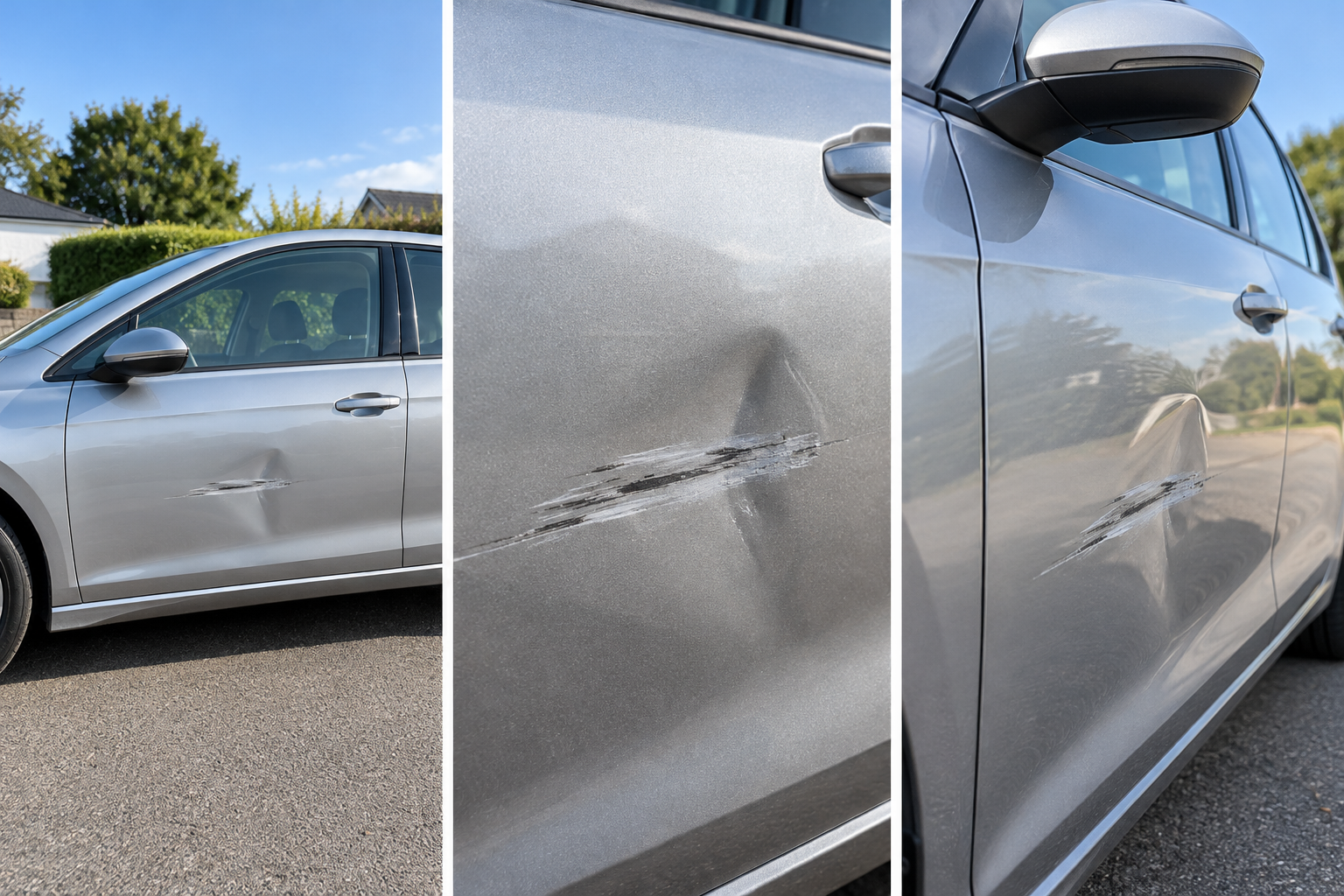
What Photos Should You Send for a Crash Repair Assessment?
Learn which photos to send for a crash repair assessment in Mullingar, including dents, scratches and panel damage. Clear photographs help us review the visible damage and advise on the next step.
Read article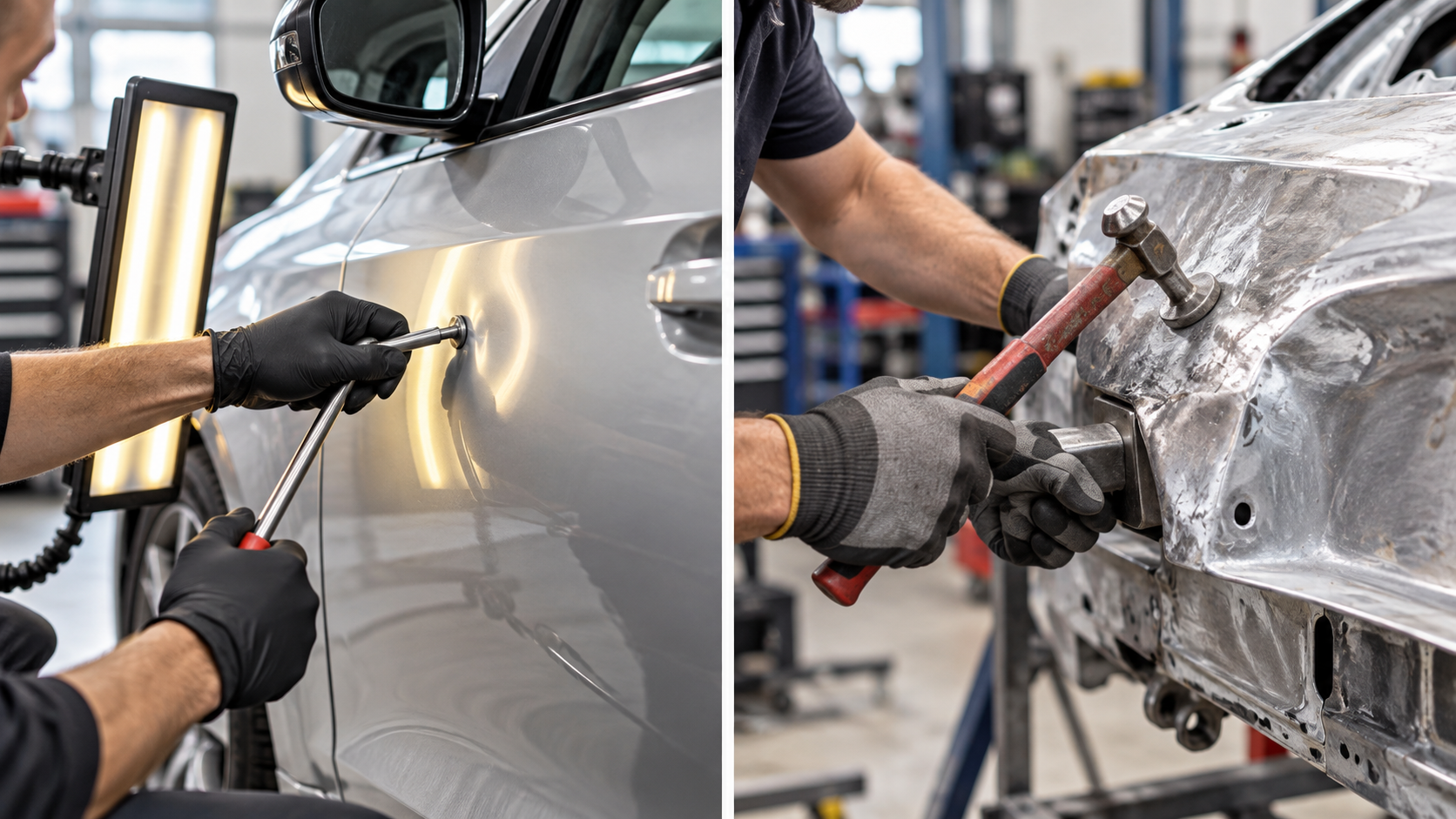 Education
Dent Removal vs Panel Beating: What's the Difference?
Not sure if your car needs dent removal or panel beating? Learn the differences, when each may be suitable and how to request a repair assessment in Mullingar.
Read articleReady to show us the damage?
Submit clear photographs through our online Damage Check. We'll review the visible damage and help you understand the next practical step for your vehicle.